Understanding Customers Better Than They Understand Themselves
A one-day special event workshop with Darrell Mann, Systematic Innovation. UK.
Day: January 13, 2012
Venue: Gun Room, Hong Kong Yacht Club, Causeway Bay
Registration: 8:30
Workshop start: 9:00
Lunch: 12:30 to 14:00
Workshop finish: 17:00
Price: HK$1,200 for this FULL DAY event (includes lunch). A discount is available for members who’s registration is confirmed before the end of this week.
Details of the event and registration can be found below.
Supporting organisations:
![]() |
![]() |
Registrations for this event have closed.
Everyone knows that capturing the Voice of the Customer is a vital part of any organisation, whether the enterprise be public or private, profit or non-profit, or focused on products or services. Unfortunately, what every organisation knows is that the customer is very often completely unable to tell us what they want next. They will know to ask for better and cheaper, but, to quote Henry Ford, what they are asking for is a faster horse and not a car.
So, they don’t know what to ask for beforehand, but as soon as they see it (or pretty soon after), they know that they want it. What can organisations do in this situation?
Based on a three million data-point 12 year programme of research, the workshop will reveal some of the underlying DNA of innovation and change , including insights into why most change initiatives fail and what organisations need to do to make innovations succeed.
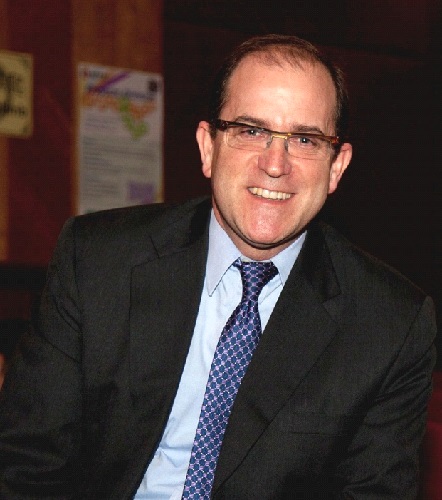
Darrell Mann Director, Systematic Innovation
With over 800 papers and articles to his name, plus the best-selling ‘Hands-On Systematic Innovation’ and TrenDNA books, Darrell is now one of the most widely published authors on innovation in the world. Featured in ‘Who’s Who in the World’, Darrell is also recognised as one of the world’s most prolific inventors. His consulting clients include Procter & Gamble, Siemens, Petronas, RioTinto, SABIC, Eli Lilly, Nestle, Oman government and, through EU-supported research and dissemination programmes, a wide roster of SME organisations. His work involves a spectrum of applications from strategy development to IP creation to problem solving in technical, business and behavioural areas.
Programme:
Big Picture Overview – why so many attempts (97%) to understand customers go wrong and what successful companies do that the rest somehow fail to do.
Innovation = commercially successful step-change = Voice of Customer x Voice of System.
Outcome: an understanding of the DNA of innovation success and that there is a scientific way to hear the real voice of the customer
Voice Of Customer Dimension 1 – How We Think
Outcome: understanding the first critical dimension: why the way we organise information in our heads leads us into thinking that customers behave unpredictably. Includes a questionnaire for you to calibrate yourself against the various universal Thinking Styles.
Voice Of Customer Dimension 2 – Generational Cycles
Outcome: understand the second critical dimension: the high degree of predictability found in generational patterns. You learn what this means for the way we design our products and services and how to predict trends that haven’t started yet.
Voice of Customer Interactions – unravelling the complexities of societal trend patterns.
Outcome: practical tools that allow the complexity of societal trends to be mapped in a meaningful way and learning that the real trick to seeing the real voice of the customer lies between different trends rather than in them
Voice of System – Predictable Evolution Of Technical & Business Systems
Outcome: once we understand what the customer really wants, the next job is to deliver them the right solution. You will learn a pair of tools that will enable rapid convergence of successful solutions. Someone, somewhere has already solved your basic problem is the hypothesis; here we show you how to find them.
Putting It All Together
Outcome: an overall process that you can take back to your organisations. You are welcome to bring along their own future prediction problems and challenges to work on during the frequent exercises scheduled through the event.


Event summary : Whispered Voices – The DNA of Innovation
The HKKMS is very grateful to Eric Spain, Director of Innovation Insight, for his assistance in arranging the TrenDNA workshop, which was conducted by Darrel Mann of ‘Systematic Innovation’ UK. Eric previously spoke to the Society about Systematic Innovation and the following is his summary on the day’s highlights.
As Henry Ford once said: “if you ask people what they want. they would say “a better horse”. Closer to home, nobody knew that they wanted an iPad until they used one – and Apple does almost no market research.
Systematic Innovation (derived from TRIZ) is a way of overcoming mental inertia for seeking new ideas that eventually become things of value. However, it still leaves the end question: who will value it? Whilst ‘one should never make predictions – particularly about the future’ something better than guessing user needs is wanted.
This is ‘TrenDNA’ which is based on a three million data-point 12 year programme of research that revealed some of the underlying DNA of innovation and change, including insights into why most change initiatives fail and what organisations need to do to make innovations succeed.
The start of an innovation processes is ‘function’: what function are we hoping to provide and who will value it? J.P. Morgan said “man buys for two reasons: the good reason (tangible) and the real reason’ – something intangible that he may not even know himself and may be more to do with status that usefulness.
So, who is the person who will most value your product or services?
This is where the principles of TrenDNA helps.
The first derives from the work of Harry Dent whose research showed the propensity to spend related to age. In the developed world, this peaks at about 48 years old.
The next two principles are about how people think and how one generation of people comes to influence the next. Since Maslow’ hierarchy of needs, Clare Graves, through a 30 years programme of research in great depth, laid the basis of ‘Spiral Dynamics’ (1998) which is all about how people think (not what they think). It suggests that there are eight ways that are named: Survival,Tribal, Feudal, Order, Scientific, Communitarian, Hierarchy and Holistic. People in one are not ‘better’ than others — just different and these differences have to be understood when determining if they will ‘buy into’ what you are offering. For example, the way of selling the idea of innovation to a highly successful ‘Order’ manager will be rather different from selling it to the Holistic one!
The second principle comes from the research of two historians William Strauss and Neil Howe (1998). They uncovered a number of patterns describing how societies seem to repeatedly pass through certain stages of hitting and overcoming the same problems. The most important of these is the way that parents raise their child will, in turn, affect the way in which these eventually raise their own children. The overall result of this is that society as a whole, at any time, has four generations with different characteristics which, in our time, are Generation Y, Silent, Baby Boomers, Generation X.
Of course, this does not mean that everyone fits precisely into any characteristic but the ‘flavour’ of an age group at any time tends that way and is meaningful to anyone trying to understand what they value.
All this now reaches the point of huge complexity so a tool is needed to manage create a map that not only simplifies it but also points to what we are seeking. This is done with a set of cards that provoke thinking and help resolve the contradictions that lead to an innovation that a group of people will value it.
TrenDNA needs the explorer to go through a number of stages of being provoked into thinking outside the box. It is not step-by step or ‘push button’ but requires commitment of some time.
Darrell Mann is an inspiring and energetic teacher and everyone enjoyed a stimulating and insightful day. We hope to get a repeat some time in the future.
→ Leave a comment
Posted in Commentary
Tagged Events, Innovation